

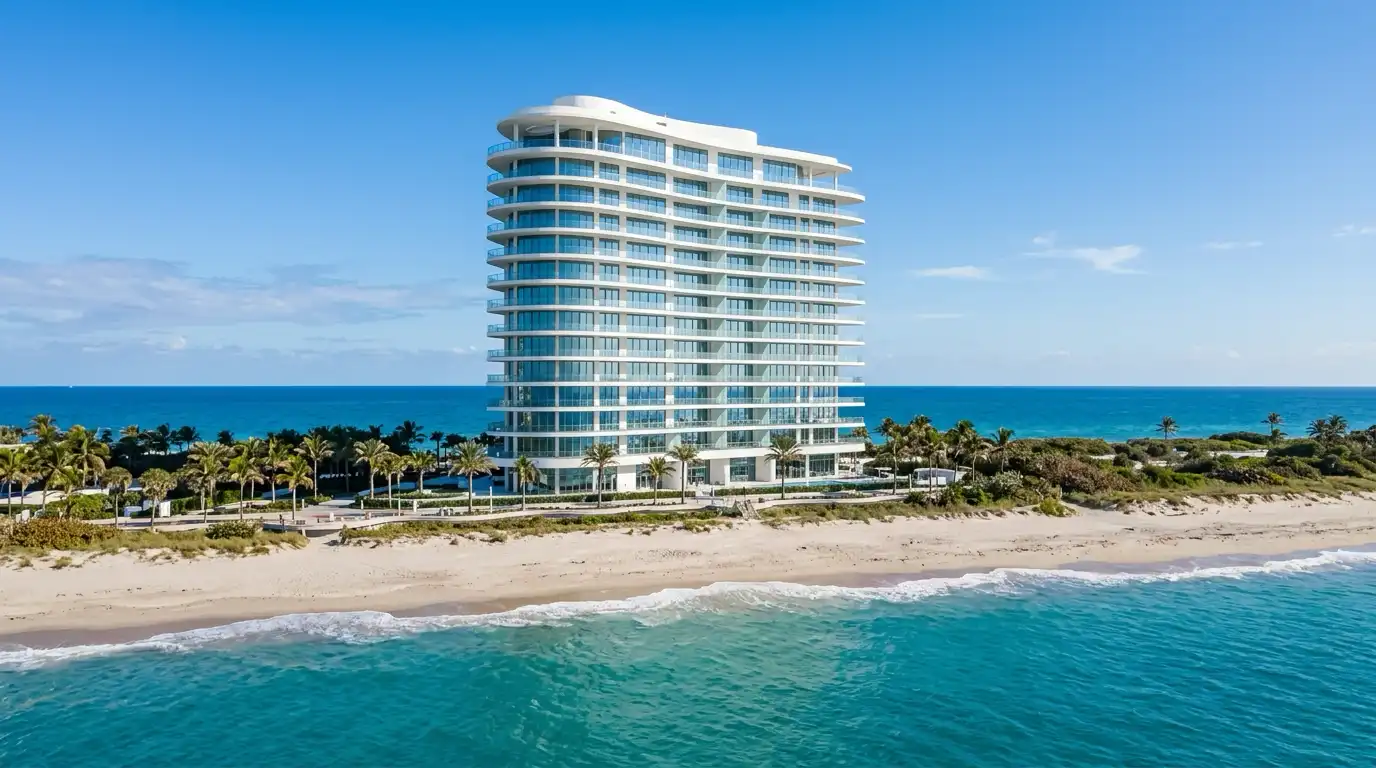
Florida condo law in September 2026 is the post-Surfside framework built between 2022 and 2025, and the 2026 legislative session left it essentially untouched. A condo building of three or more habitable stories must pass a milestone structural inspection at 30 years and every 10 years after, must have a structural integrity reserve study at least every 10 years, and can no longer let owners vote to waive or cut reserves for its structural components. Boca Raton’s own recertification program, a separate city requirement, adds a structural recertification at 25 years for condominiums within three miles of the coast. Resale buyers must receive the inspection summary and the reserve study and have seven days, excluding weekends and legal holidays, to cancel after receiving them. The practical result is higher monthly fees, more special assessments, stricter mortgage approvals, and a wider price gap between well-funded buildings and underfunded ones.
We are Steven, Elliot, and Wendy Koolik, and we have sold condominiums on Ocean Boulevard, along the Intracoastal, and in downtown Boca Raton through every version of these rules. Our practice leans toward sellers, but on both sides of the table the building’s paperwork now matters as much as the unit’s view. This guide goes deeper than our East Boca seller’s guide, which covers the resale document package in brief.
The Quick Take
- No substantive change in 2026: in the milestone, reserve, disclosure, and records statutes we compared, the only 2026 changes were a technical reviser’s bill and a cross-reference reenactment. HB 657, the most-watched condo bill, passed the House and died in the Senate.
- Milestone inspections (Florida Statute 553.899): by December 31 of the year a building turns 30, then every 10 years. Boca Raton’s recertification ordinance uses 25 years for condominiums within three miles of the coastline.
- Structural integrity reserve studies (718.112(2)(g)): at least every 10 years; the statewide deadline was December 31, 2025, and none may be completed after December 31, 2026.
- Structural reserves cannot be waived or reduced by owner vote for budgets adopted on or after December 31, 2024. Associations may fund them with special assessments, lines of credit, or loans.
- Resale buyers get seven days, excluding weekends and legal holidays, to cancel after receiving the documents. New-construction buyers get 15 days.
- Fannie Mae treats a building with unaddressed critical repairs as ineligible, and it retired Limited Review for loan applications dated on or after August 3, 2026.
Buying or Selling a Boca Raton Condo This Season?
We read the milestone summary, the reserve study, the budget, and the minutes before we price a unit or recommend an offer. Ask us what the paperwork says about the building you are considering.
Contact The Koolik GroupWhere Florida Condo Law Stands in September 2026
The current rules came in four waves. Senate Bill 4-D, passed in a 2022 special session and effective May 26, 2022, created milestone inspections and structural integrity reserve studies and ended the waiver of structural reserves. Senate Bill 154 (2023) refined the inspection program, including the rule that phase two repairs begin within 365 days. House Bill 1021 (2024) expanded association duties, including a website requirement that reached 25-unit associations on January 1, 2026. House Bill 913, approved in June 2025 and effective July 1, 2025, extended deadlines, added funding options, and lengthened the resale cancellation window.
The 2026 session was a pause. We compared the 2025 and 2026 editions of the Florida Statutes for the milestone statute (553.899) and the budget, disclosure, and records statutes (718.112, 718.503, and 718.111). The milestone statute was not amended in 2026. The other three were touched only by Chapter 2026-14, the annual reviser’s bill, which renumbered cross-references, and by Chapter 2026-168, a nonprofit-corporation law that reenacted one paragraph of 718.111 without changing it. The framework below is the law in force today.
| Requirement | Who it applies to | Key dates and numbers | Source |
|---|---|---|---|
| Milestone inspection (state) | Condo and co-op buildings three habitable stories or more | By December 31 of the year the building reaches 30 years from its certificate of occupancy, then every 10 years. Turned 30 before July 1, 2022: due by December 31, 2024. Turned 30 from July 1, 2022 through December 31, 2024: due by December 31, 2025 | F.S. 553.899(3)(a) |
| Local 25-year option | Where the local building department finds conditions such as proximity to salt water require it | By December 31 of the year the building reaches 25, then every 10 years | F.S. 553.899(3)(b) |
| Boca Raton recertification | Condo and co-op buildings 3 stories or more, or 50 feet or taller | 30 years, or 25 years within 3 miles of a coastline; Ordinance 5589, adopted August 24, 2021; $500 review fee | City Code Sec. 19-162 |
| Phase one and phase two | Every building that receives the city’s notice | Phase one within 180 days of notice; phase two progress report within 180 days of phase one; repairs begun within 365 days of a phase two report | F.S. 553.899(6), (7), (11) |
| Structural integrity reserve study | Residential condo buildings three habitable stories or more | At least every 10 years; deadline December 31, 2025; never later than December 31, 2026 | F.S. 718.112(2)(g) |
| No waiver of structural reserves | Owner-controlled associations required to have a study | Budgets adopted on or after December 31, 2024 | F.S. 718.112(2)(f)2.b. |
| Reserve pause for milestone repairs | Associations with a milestone inspection in the prior 2 calendar years | Budgets adopted on or before December 31, 2028; up to 2 consecutive budgets; majority of all voting interests | F.S. 718.112(2)(f)2.e. |
| Association website | Associations with 25 or more units | Required since January 1, 2026; documents posted within 30 days | F.S. 718.111(12)(g) |
| Resale rescission | Buyers of resale units | 7 days, excluding weekends and legal holidays, after contract and receipt of documents (3 days before July 1, 2025) | F.S. 718.503(2) |
| New-construction rescission | Buyers from a developer | 15 days after contract and receipt of the developer’s documents | F.S. 718.503(1) |
Milestone Inspections: The State’s 30-Year Rule and Boca Raton’s 25-Year Rule
A milestone inspection is a structural examination by a Florida-licensed architect or engineer of a building’s load-bearing elements and primary structural systems. It is not a building code review; its purpose is to confirm the structure is sound and identify any repair or replacement a structural component needs.
Phase one is visual. The inspector examines habitable and nonhabitable areas and the major structural components. If there are no signs of substantial structural deterioration, the inspection ends there. If there are, phase two follows, which may involve destructive or nondestructive testing and must recommend a repair program. Every report must state whether unsafe or dangerous conditions were observed and identify items needing further inspection. The association has 45 days to deliver the inspector-prepared summary to every owner, post it on the property, and publish the full report on its website if it is required to have one.
The Boca Raton layer
State law lets a local building department require the first inspection at 25 years where salt-water exposure justifies it. Boca Raton acted on its own authority. On August 24, 2021, the City Council adopted Ordinance No. 5589, creating the Building Recertification Inspection Program in Section 19-162 of the city code. It covers condominium and cooperative buildings three stories or more, or 50 feet or taller, at 30 years, and condominium and cooperative property within three miles of a coastline at 25 years. The city charges $500 per recertification and publishes its schedule for 2027 through 2031.
For the towers on Ocean Boulevard and along the Intracoastal, plan on the 25-year clock. For buildings farther west, whether the three-mile rule applies depends on distance from the coastline as the statute defines it, and the city’s Recertification Coordinator can confirm it for a specific address.
| Certificate of occupancy year | Reaches 25 (Boca coastal trigger) | Reaches 30 (state trigger) | What a buyer should expect to see |
|---|---|---|---|
| 1996 | 2021 | 2026 | A local recertification due since 2021 (the city publishes a backlog schedule, so confirm its status) and a state milestone due by December 31, 2026 |
| 2001 | 2026 | 2031 | A first coastal recertification now or imminent |
| 2010 | 2035 | 2040 | No milestone yet; the reserve study and budget carry the story |
Our arithmetic from the statutory ages, for illustration. Confirm any building’s schedule with the association and the city.
Structural Integrity Reserve Studies and the End of Waived Reserves
The structural integrity reserve study, or SIRS, is the financial companion to the milestone inspection. The inspection asks whether the building is sound today; the study asks whether the association is saving enough to keep it that way. It is required at least every 10 years for every residential condominium building of three or more habitable stories, and it must be performed or verified by a licensed engineer or architect or a reserve specialist certified by the Community Associations Institute or the Association of Professional Reserve Analysts.
The study covers eight components: roof; structure, including load-bearing walls; fireproofing and fire protection; plumbing; electrical; waterproofing and exterior painting; windows and exterior doors; and any other item costing more than $25,000 (or the state’s inflation-adjusted figure) whose failure would harm the first seven. For each it states remaining useful life and replacement cost and sets a reserve funding plan, at minimum a baseline plan that keeps the reserve balance above zero every year.
The biggest change is the end of the waiver. Before Surfside, a majority of owners could vote each year to fund partial reserves or none. For any budget adopted on or after December 31, 2024, owners of an association required to have a study may not vote to provide no reserves or reduced reserves for those eight components, or spend those reserves on anything else. Owners may still waive reserves for other items.
After a milestone inspection, an association may delay a required study for up to two budget years to focus on repairs, and a milestone inspection from the past five years can stand in for the study’s visual portion. Directors must sign an affidavit that they received the study. The association then has 45 days to give every owner a copy or a notice that it is available, and 45 days to file a completion statement with the state, whose Division of Condominiums, Timeshares, and Mobile Homes publishes submissions in a searchable SIRS reporting database. Entries are displayed exactly as submitted, so treat the database as a cross-check, not a substitute for the study.
What HB 913 Changed in 2025
House Bill 913 passed with final votes of 37-0 in the Senate and 112-0 in the House, became Chapter 2025-175, and took effect July 1, 2025. Beyond the new study deadline and the three-habitable-story scope, these provisions matter most to Boca Raton owners:
- Alternative funding. Owner-controlled associations may fund structural reserves through regular assessments, special assessments, lines of credit, or loans. A special assessment, line of credit, or loan requires a majority of the total voting interests, a line of credit or loan must cover any previously waived or unfunded reserves, and the details must appear in the annual financial statement buyers receive.
- Repair-first pause. For budgets adopted on or before December 31, 2028, an association that completed a milestone inspection within the previous two calendar years may, with a majority of all voting interests, pause or reduce reserve contributions for up to two consecutive budgets to pay for the recommended repairs, then must obtain a new study before resuming. Developer-controlled associations and those under owner control for less than a year are excluded.
- Higher threshold. An unlisted item needs its own reserve only above $25,000, indexed to inflation, up from $10,000.
- Conflict disclosure. Engineers, architects, and contractors bidding on an inspection or study must disclose in writing whether they intend to bid on the repair work.
- Insurance. The replacement cost used to set the association’s coverage must be determined at least once every three years.
- Reporting. Associations had to open an online account with the state by October 1, 2025 and report annually, including building age and assessments with their purpose.
- Buyer protection. The resale cancellation window grew from three days to seven.
Why Fees Can Rise More Than 15 Percent Without an Owner Vote
A board that proposes assessments above 115 percent of the prior year’s must also offer a substitute budget without discretionary spending, which owners can adopt by majority vote. Owners sometimes assume that caps increases. It does not reach the increases that matter now. The statute excludes required reserves, anticipated expenses for the eight structural components, and insurance premiums from the calculation. A budget that rises because the reserve study requires it, or because the master premium rose, does not trigger the substitute budget.
What It Means in Practice: Assessments, Fees, and Timing
The law did not create the cost of maintaining an aging coastal tower. It made the cost visible and removed the option to defer it.
Higher regular assessments come first. Once structural reserves cannot be waived, the reserve line follows the study’s funding plan, and the study must be updated before a budget that departs from it. Buildings that waived reserves for years see the largest step up.
Special assessments follow when an inspection or study identifies work the reserves cannot cover in time. Any meeting where assessments will be considered must say so in the notice and state the estimated cost and purpose, and the proposed budget must reach owners 14 days before the budget meeting. Those notices and the minutes are where a buyer finds an assessment discussed but not yet approved.
Timing matters because Florida makes a new owner jointly and severally liable with the previous owner for assessments due before the transfer of title. That is why the estoppel certificate is the key number at closing. The association must issue it within 10 business days, itemizing every assessment owed and every one scheduled to come due during its 30-day effective period (35 days if mailed).
The Palm Beach County Condo Market Behind the Law
| Segment | Figures | Window and source |
|---|---|---|
| Palm Beach County existing condos and townhouses | 765 sales, down 6.71 percent year over year; median $300,000, up 5.26 percent; 6.7 months of inventory; median 69 days to contract; 57.2 percent cash; inventory down a seventh consecutive month | August 2026, MIAMI Realtors release of September 16, 2026 |
| Palm Beach County condos at $1 million and up | 770 sales, up 26.6 percent; average $2.39 million | Q2 2026, Keyes Company and Illustrated Properties Luxury Market Report via RISMedia, July 22, 2026 |
| Boca Raton and Delray Beach luxury attached (condos and townhomes, combined) | Median $775,000, up 5 percent year over year; 36 median days on market, down from 98; 16 percent sales ratio, a balanced market | August 2026, Institute for Luxury Home Marketing via Boca Raton Premier Properties, September 21, 2026 |
More than half of county condo buyers paid cash, which blunts the financing issues below. In a balanced market, the building with a clean milestone report, a funded study, and no pending assessment is the one that moves first.
Want the Building Reviewed Before You Commit?
We pull the milestone summary, the reserve study, the last 12 months of minutes, and the estoppel early, so the questions get answered before the cancellation clock runs.
Contact The Koolik GroupReading the Resale Package: What a Buyer Receives Under 718.503
A resale buyer is entitled, at the seller’s expense, to current copies of eight documents: the declaration of condominium; the articles of incorporation; the bylaws and rules; the annual financial statement and annual budget; the inspector-prepared milestone summary, if the building has one; the most recent structural integrity reserve study, or a statement that none has been completed; the turnover inspection report for any turnover inspection on or after July 1, 2023; and the state’s Frequently Asked Questions and Answers sheet. The buyer is also entitled to the state’s governance form.
The contract must give the buyer seven days, excluding Saturdays, Sundays, and legal holidays, after the later of signing and receiving the documents to cancel in writing, and the buyer may extend closing by up to seven such days. Any waiver is void, and the right ends at closing. If the association was required to complete a milestone inspection, turnover report, or reserve study and has not, the contract must say so conspicuously. A nonconforming contract is voidable by the buyer before closing. Here is how we read the package.
The milestone summary
Look first for the phase. Phase one with no substantial structural deterioration is the clean result. Phase two means the engineer found deterioration; find the repair program, whether it is contracted and permitted, and remember that repairs must begin within 365 days. Then read the statement on unsafe or dangerous conditions and the items flagged for further inspection.
The reserve study
Compare the study’s recommended annual contribution with the reserve line in the budget. If the budget is lower, ask why: the association may have used the HB 913 repair-first pause, or it may be out of compliance. Then look at components with short remaining lives, especially roofing, waterproofing, windows, and concrete, and the gap between their replacement cost and the reserve balance. That gap is the future assessment, loan, or fee increase.
What the package leaves out
The statute does not hand you the board minutes, the full milestone report, or the estoppel. Associations with 25 or more units must post official records, including the full milestone report, on a website or app. The last 12 months of minutes are where a proposed assessment appears before it is voted.
Financing: How Lenders Read the Building
A conventional condo loan that a lender intends to sell to Fannie Mae or Freddie Mac must meet their project standards, and those standards now decide whether many buildings can be financed at all. The buyer’s credit is half the approval; the building is the other half.
Fannie Mae’s Selling Guide, dated August 5, 2026, treats a project in need of critical repairs as ineligible. Critical repairs include deficiencies that could contribute to a critical system failure within a year; water intrusion or damaging leaks; advanced physical deterioration; failing a mandatory structural inspection; and any unfunded repair over $10,000 per unit due within 12 months. Sea walls, balconies, waterproofing, and parking structures are among the listed examples. Routine, preventive work is not critical. Lenders must review structural inspections from the past three years and, for each special assessment, its purpose, approval date, amount, remaining balance, and payoff date. A special assessment tied to an unremediated critical repair makes the building ineligible.
Under Fannie Mae’s Full Review, the budget must fund replacement reserves of at least 10 percent, and no more than 15 percent of units may be 60 or more days delinquent on dues or on any special assessment. A reserve study can substitute for the 10 percent test only if the project’s funded reserves meet or exceed the study’s recommendations, and the guide says the baseline method cannot be used to waive the requirement. Fannie Mae’s March 2026 lender letter tightens this to the study’s highest recommended allocation. Because baseline funding is exactly the minimum Florida’s study requires, a building can comply with Florida law and still fall short of Fannie Mae.
Fannie Mae’s March 2026 lender letter retired Limited Review, the lighter path for established buildings, for loan applications dated on or after August 3, 2026, and raises the reserve minimum from 10 to 15 percent of budgeted assessment income for applications dated on or after January 4, 2027. Freddie Mac applies a parallel critical-repair rule. FHA is a minor factor here: MIAMI Realtors reported in September 2026 that only 21 of 2,397 condominium buildings in Miami-Dade, Broward, and Palm Beach counties are FHA-approved.
Buyers should have the lender review the building at the start. Sellers should know before listing whether the building can be financed, because one that cannot sells only to cash buyers, at a price that reflects it.
Insurance: What the Association Covers and What You Do
The association must carry adequate property insurance, and since HB 913 the replacement cost behind that coverage must be determined at least once every three years. The owner insures interior finishes, fixtures, appliances, cabinets, and window treatments serving only that unit, under a policy that must conform to Florida Statute 627.714. That statute requires at least $2,000 of loss assessment coverage, but only for assessments resulting from a direct loss of a type the owner’s policy covers, such as storm damage to the common elements. In our reading, an assessment to fund milestone repairs or rebuild reserves is not that kind of loss, so do not assume your policy will pay it. And when a named storm threatens Florida, carriers stop binding new policies, which can delay a financed closing.
For Sellers: Preparing and Pricing a Unit With a Pending Assessment
An assessment on the horizon does not make a unit unsellable. An undisclosed or misunderstood one makes it hard to close.
Gather the documents at listing. The buyer’s seven-day clock starts only when the last required document arrives, and buyers read slowly in a building with a phase two report and a loan. Order the estoppel, the full 718.503 package, the governance form, and 12 months of minutes before the first showing.
Decide who pays before offers arrive. The standard Florida Realtors and Florida Bar Condominium Rider is CR-7, revised June 2025. It treats an assessment as levied when it is approved as required for enforcement. For assessments levied by the contract date, and separately for those levied before closing, the parties check whether buyer or seller pays in full at or before closing; if the box is blank, the seller pays. If the association lets a buyer assume installments, the seller pays those due on or before closing, and the parties choose who pays the rest, with the buyer paying if left blank. The seller must also list assessments levied or discussed at a board meeting in the prior 12 months. Leaving boxes blank is a decision.
Price the building, then the unit. A unit in a building with a large approved assessment is not worth the same as an identical unit in a building that already paid for its restoration, and the estoppel and minutes will show the difference. The clean approaches are to credit the assessment, to price net of it and let the buyer assume it, or to pay it at closing and market the unit as paid. Cash buyers will often assume an assessment for a discount; financed buyers may not be able to close until the repair is complete.
A Seller’s Pre-Listing Condo File
- Estoppel certificate at listing, refreshed near closing.
- The full 718.503(2) package plus the governance form.
- The full milestone report and any city recertification correspondence.
- The current reserve study and whether the budget matches its funding plan.
- Board minutes and budget notices for the past 12 months.
- A lender’s read on the building’s eligibility.
- A decision on the CR-7 special assessment boxes.
New Construction or an Older Building?
| Factor | New construction (developer sale) | Established building (resale) |
|---|---|---|
| Cancellation window | 15 days after contract and receipt of documents, plus 15 days after any material adverse amendment | 7 days, excluding weekends and legal holidays, after contract and receipt of documents |
| Budget reliability | The contract must state that the developer’s budget figures are estimates and actual costs may exceed them | Actual financial statements and a study built on real condition |
| Reserves | A developer-controlled association may not vote to waive or reduce reserves before turnover | Structural reserves cannot be waived for budgets adopted on or after December 31, 2024 |
| Inspections | Before turnover, the developer must deliver a reserve study on the structural components and a report on elevators, cooling and heating, pools, seawalls, and paving | State milestone at 30 years and every 10 years, plus the city’s 25-year recertification in coastal Boca Raton; study every 10 years |
| Near-term assessment exposure | Structural work is decades away; watch the first owner-controlled budget | Depends on age, the milestone result, and pre-2024 reserve funding |
Often the strongest value is an established building that has completed its milestone repairs and rebuilt its reserves: prior owners absorbed the cost, and the buyer gets a documented, recently repaired structure at a resale price. The weakest is a building that has its phase one report, owes a phase two, and has not voted on funding. Our guide to new construction in Boca Raton covers the same tradeoff for houses.
The Buyer’s Due-Diligence Checklist
Before and During the Seven-Day Window
- Certificate of occupancy date, and which clock applies: 30 years, or Boca Raton’s 25-year coastal trigger.
- The milestone summary and full report: phase, unsafe conditions noted, further inspections, and the repair program.
- Repair status: contract, permits, a start within the 365-day window, and expected completion.
- The reserve study: date, preparer, recommended contribution, short-life components, and whether the budget matches.
- Any reserve pause under the milestone-repair option and when contributions resume.
- Loans and lines of credit: balance, rate, term, and debt service in the fee.
- Special assessments approved, pending, or discussed in 12 months of minutes and notices.
- The estoppel: amounts owed and scheduled, transfer or capital contribution fees, approvals, and rights of first refusal.
- Insurance: master carrier, last replacement-cost date, and your loss assessment limit.
- Your lender’s review of the building before the cancellation window closes.
- The state’s SIRS reporting database entry, as a cross-check.
Our home-buying checklist covers the rest of the transaction, and our guide to Boca Raton property taxes and the homestead exemption explains why the unit’s tax bill changes after you buy.
Frequently Asked Questions
Did Florida change its condo laws in 2026?
Not in any substantive way. The milestone inspection statute, 553.899, was not amended in 2026, and the budget, disclosure, and records statutes (718.112, 718.503, and 718.111) were touched only by the annual reviser’s bill, which corrected cross-references, and by a nonprofit-corporation law that reenacted one paragraph without changing it. HB 657, the broad community-association bill, passed the House and died in the Senate. The rules in force are those enacted from 2022 through 2025, most recently HB 913, effective July 1, 2025.
When does a Boca Raton condo building need a milestone inspection?
State law requires a condominium or cooperative building of three or more habitable stories to have a milestone inspection by December 31 of the year it reaches 30 years from its certificate of occupancy, and every 10 years after. Boca Raton’s Building Recertification Inspection Program, adopted August 24, 2021 under Ordinance 5589, covers condo buildings three stories or more or 50 feet or taller at 30 years, and at 25 years for condominium property within three miles of a coastline. Oceanfront and Intracoastal towers should plan on 25 years.
What is the difference between a phase one and a phase two milestone inspection?
Phase one is a visual examination by a Florida-licensed architect or engineer, completed within 180 days of the city’s notice. If it finds no signs of substantial structural deterioration, the inspection ends. If it does, phase two follows and may include destructive or nondestructive testing; a progress report is due within 180 days of the phase one report, and repairs must begin within 365 days of the phase two report. Surface cracks, leaks, and peeling finishes count as deterioration only if the engineer determines they are a sign of it.
Can a Florida condo association still waive its reserves?
Not for structural components. For budgets adopted on or after December 31, 2024, owners of an association required to have a structural integrity reserve study may not vote to provide no or reduced reserves for the roof, structure, fireproofing, plumbing, electrical, waterproofing and painting, windows and exterior doors, or related items over $25,000. They may still waive reserves for other items. HB 913 added a temporary exception: for budgets adopted on or before December 31, 2028, an association that completed a milestone inspection in the prior two calendar years may pause or reduce contributions for up to two budgets, by majority of all voting interests, to fund the repairs.
What is a structural integrity reserve study and how often is it required?
A structural integrity reserve study, or SIRS, is a visual inspection and funding plan for eight structural components of a condo building: roof, structure, fireproofing and fire protection, plumbing, electrical, waterproofing and exterior painting, windows and exterior doors, and related items over $25,000. It states each item’s remaining life and replacement cost and recommends reserve contributions, at minimum a baseline plan that keeps reserves above zero. It is required at least every 10 years for buildings of three or more habitable stories; the deadline was December 31, 2025, with none allowed after December 31, 2026.
How long does a buyer have to cancel a Florida condo resale contract?
For resale contracts signed on or after July 1, 2025, the buyer may cancel in writing within seven days, excluding Saturdays, Sundays, and legal holidays, after the later of signing and receiving the required documents, including the milestone summary and the most recent reserve study or a statement that none exists. HB 913 lengthened the window from three days. The buyer may also extend closing by up to seven such days, any waiver is void, and the right ends at closing. Buyers from a developer have 15 days.
Who pays a special assessment when a Florida condo is sold?
The contract decides. The Florida Realtors and Florida Bar Condominium Rider (CR-7, revised June 2025) treats an assessment as levied when approved as required for enforcement. For assessments levied by the contract date, and separately for those levied before closing, the parties choose whether buyer or seller pays in full; if the box is blank, the seller pays. If installments can be assumed, the seller pays those due by closing and the parties choose who pays the rest, with the buyer paying if blank. Florida law also makes a new owner jointly liable for assessments already due at transfer.
Can I get a mortgage on a condo in a building that needs structural repairs?
Often not until the repairs are done. Fannie Mae treats a project needing critical repairs as ineligible, including buildings that failed a mandatory structural inspection or have unfunded repairs over $10,000 per unit due within 12 months, and a special assessment tied to an unremediated critical repair also disqualifies the building. Fannie Mae retired Limited Review for loan applications dated on or after August 3, 2026, so established buildings now go through Full Review or, where eligible, a Waiver of Project Review, and Freddie Mac applies a parallel critical-repair rule. Ask your lender to review the building before your cancellation window ends.
Does my condo insurance cover a special assessment?
Usually not one for structural repairs or reserves. Florida Statute 627.714 requires every unit owner’s policy to include at least $2,000 of loss assessment coverage, but it applies to assessments resulting from a direct loss of a type the policy covers, such as storm damage to common elements. In our reading, an assessment to fund milestone repairs or rebuild reserves arises from maintenance, not a covered loss. A higher loss assessment limit is worth pricing for storm-related assessments. Confirm your coverage with a licensed insurance agent.
Are new condos in Boca Raton less exposed to assessments than older buildings?
For structural work in the near term, generally yes, with conditions. A new building will not reach Boca Raton’s 25-year coastal trigger for decades, a developer-controlled association may not waive or reduce reserves before turnover, and the developer must deliver turnover inspection reports, including a reserve study. The risk shifts to the budget: Florida requires developer contracts to state that budget figures are estimates and actual costs may exceed them. An established building that has finished its milestone repairs and rebuilt reserves can carry less near-term risk than either.
Buy or Sell a Boca Raton Condo With the Paperwork Read First
4,800+ homes sold across South Florida. We read the inspection, the reserve study, and the minutes before we price a unit or write an offer, so our clients know the building as well as they know the view.
Contact The Koolik GroupBuying and Selling in Boca Raton
- East Boca Raton Seller’s Guide: Waterfront, Oceanfront, and Intracoastal
- Our Expert Home Buying Checklist
- What It Actually Costs to Own a $5M+ Home in Boca Raton
- Boca Raton Property Taxes and the Florida Homestead Exemption: A 2026 Guide
Boca Raton Market and Neighborhoods
Statutory requirements are drawn from the 2026 Florida Statutes, Florida Senate bill records, the City of Boca Raton, the Florida Department of Business and Professional Regulation, and Fannie Mae’s Selling Guide, and market figures from the sources cited above, as of September 28, 2026. This article is a plain-English orientation and is not legal advice; confirm questions about a specific contract, association, or building with a Florida attorney, lending questions with your lender, and insurance questions with a licensed agent.
Social Cookies
Social Cookies are used to enable you to share pages and content you find interesting throughout the website through third-party social networking or other websites (including, potentially for advertising purposes related to social networking).